
Institute for
Engineering Driven Health
The UD Institute for Engineering Driven Health is a cluster of innovators who develop and translate new technologies to advance human health. We engineer across multiple scales (from the subcellular to whole human level) and integrate disciplines spanning biomaterials to biomechanics to create transformative solutions to pressing healthcare needs. We also connect UD researchers and staff with external business and community partners to catalyze idea generation and technology commercialization. Our primary area of emphasis is improving human mobility, with secondary foci in immunoengineering, cancer, and regenerative medicine.
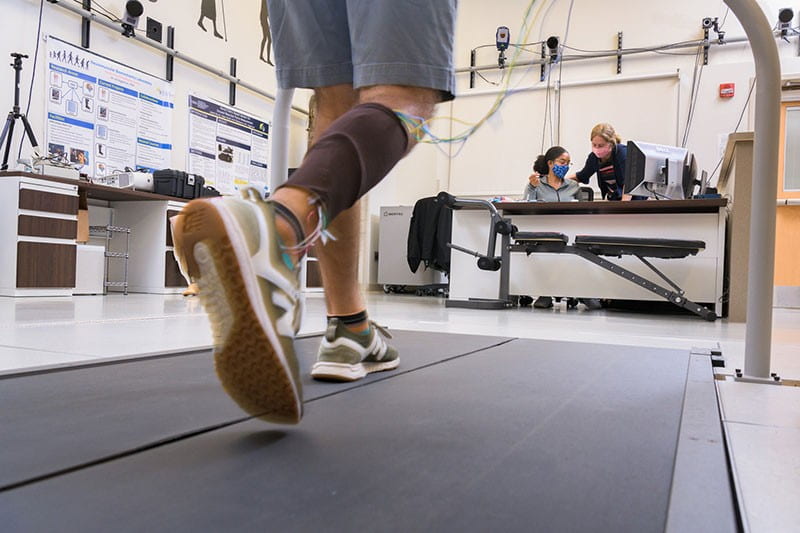
Who We Are
A cluster of innovators who strive to advance human health by applying engineering principles to solve clinical challenges.
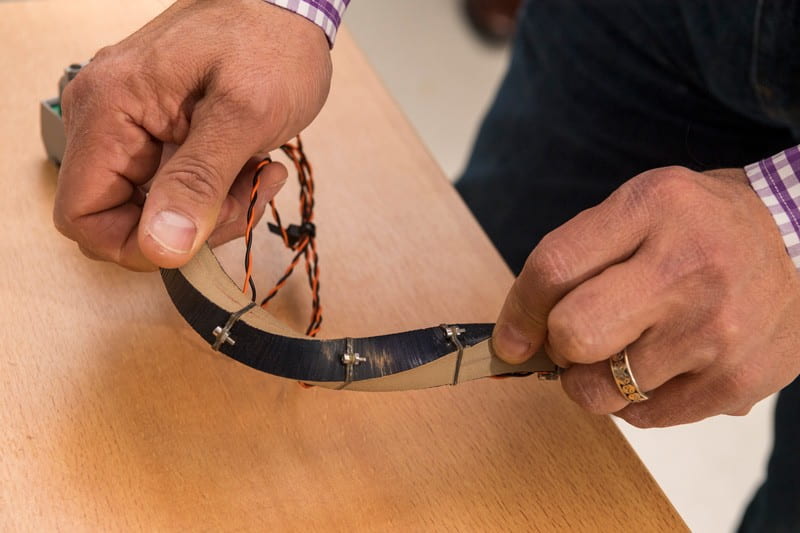
What We Do
- Develop solutions for unmet needs in health and medicine.
- Translate ideas into clinical products and processes.
- Connect people within and outside UD so multidisciplinary teams with complementary expertise can work together efficiently to evaluate new approaches.
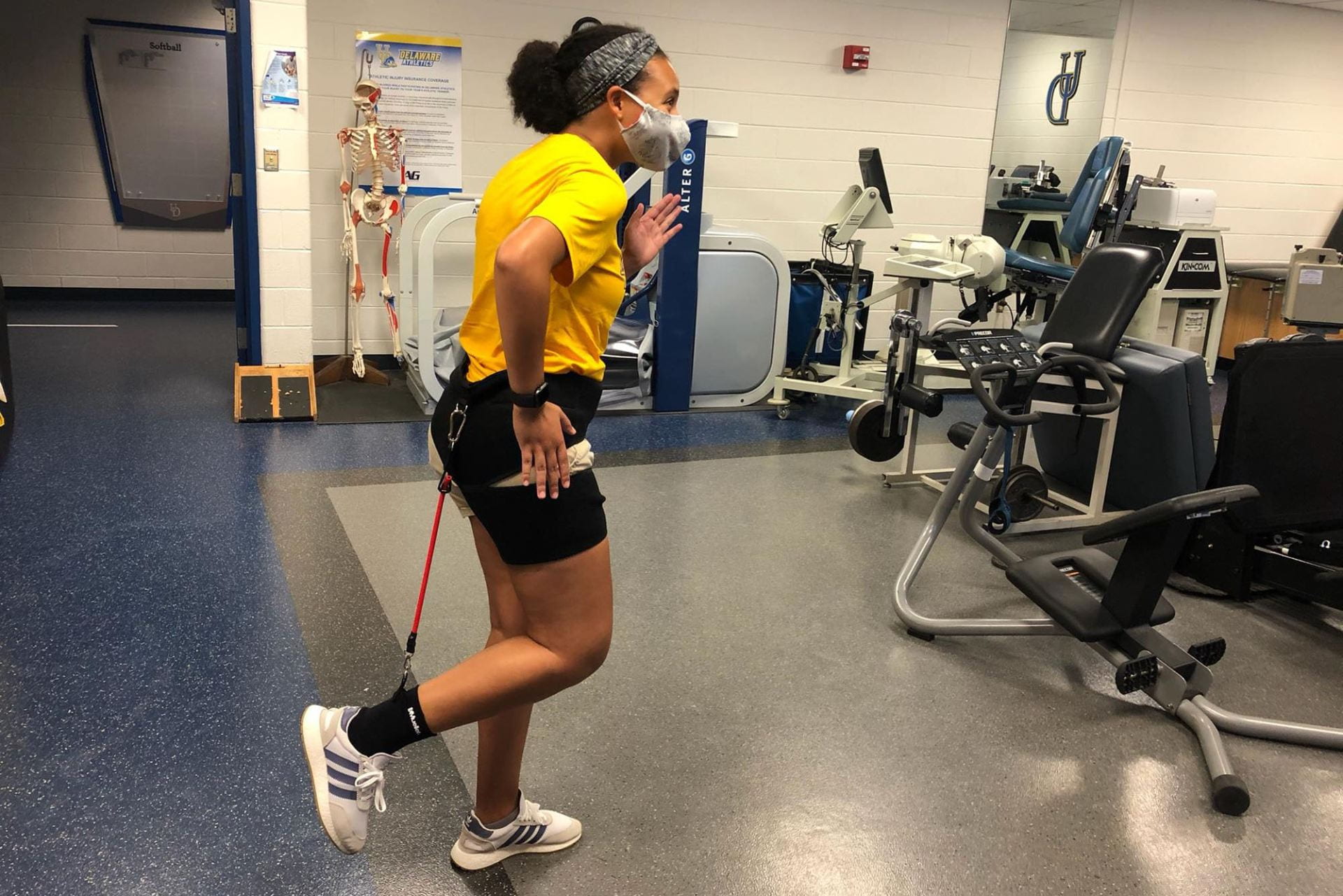
Why It Matters
Interdisciplinary teams and approaches are required to create accessible and robust solutions to big healthcare problems.
Research Areas

Bioinspired & Responsive Therapeutics

Micro-Physiological Systems & Regenerative Medicine

Wearable Technologies to Assist & Enhance

Experimental Studies & Prototypes
Opportunities & Resources
Pilot Projects
About Us
Directors, Leadership Team, and Staff
Jill Higginson, Director
Professor, Mechanical & Biomedical Engineering
University of Delaware
Emily Day, Associate Director
Professor, Biomedical Engineering
Joint Professor, Materials Science & Engineering
University of Delaware
Leadership Team
Martha Hall
Director of Innovation, Health Sciences
Assistant Professor, Health Sciences
Administrative and Technical Staff
Kayla Pariser, Project Manager
Lori May, Business Manager
Advisory Board
David Helwig
EDH Founding Donor,
UD Mechanical Engineering Alumnus
Kathy Matt
Retired Professor & Former Dean,
UD College of Health Sciences
Postdoctoral Fellows
Sara Aboeleneen
Biomedical Engineering
Advisor: Emily Day
Kelsey Gsell
Biomedical Engineering
Advisor: Dawn Elliott
Aditya Raikwar
Computer & Information Sciences
Advisor: Roghayeh (Leila) Barmaki
Matthew Short
Biomedical Engineering
Advisor: Joshua Cashaback
Previous IEDH Postdoctoral Researchers:
Michael Donzanti
Biomedical Engineering
Advisor: Jason Gleghorn
Jamie Benson
Biomedical Engineering
Advisor: Dawn Elliott
Patrick McCauley
Chemical & Biomolecular Engineering
Advisor: Catherine Fromen
Ashish Tiwari
Biomedical Engineering
Advisor: Emily Day
Abigail Nolin
Materials Science and Engineering
Advisor: Charles Dhong
Amit Chaudari
Mechanical Engineering, Center for Composite Materials
Advisor: Erik Thostenson
Associated Centers
We partner with centers and institutes around campus to promote access to specialized equipment and facilities including:
Delaware Center for Musculoskeletal Research
Center for Biomechanical Engineering Research
Center for Disabilities Studies
Center for Aging Cognition Research
Delaware Biotechnology Institute
Center for Human Research Coordination
Office of Economic Innovation & Partnerships
COBRE: Center for Cardiovascular Health
COBRE: Discovery of Chemical Probes and Therapeutic Leads
Center for Research in Soft Matter & Polymers (CRISP)
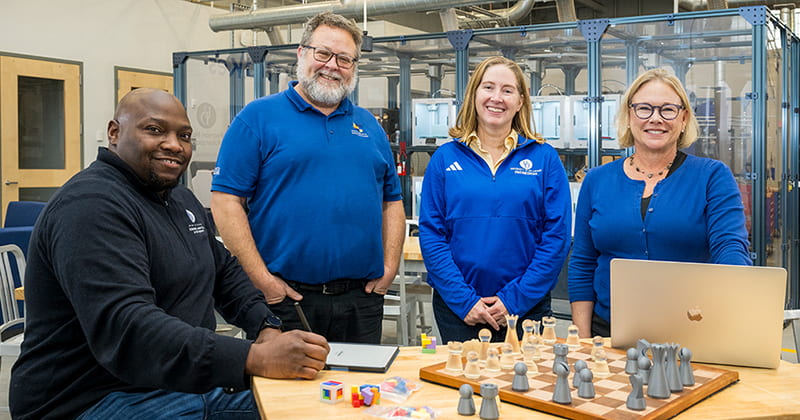
ACCELERATING TRANSLATIONAL RESEARCH
UD receives $6 million from National Science Foundation as part of inaugural translational research funding program.
EDH Newsletter Archive
Pilot Grant Opportunities
The Institute for Engineering Driven Health (IEDH) solicits applications for Pilot Project Grants. Grants are for a 6-month to 1-year period with a budget of ~$25,000 to $75,000 (direct costs) (see Budget section for more information). Research teams must include a University of Delaware (UD) faculty member, associate scientist, or postdoctoral researcher as the Principal Investigator (PI). Postdoctoral researchers must have approval from the research office to serve as PI. Projects must develop technologies for health applications and exhibit potential for rapid technology transfer/commercialization and societal or market impact.
EDH Visiting Professorships
The Institute for Engineering Driven Health offers funding support for excellent faculty members from across the United States to come to UD and engage in the vibrant EDH community. Qualified candidates must be a U.S. citizen or permanent resident at the time of application and be a full-time faculty member at an accredited U.S. college or university. Appointments may continue for up to 15-weeks (one semester). During their time at UD, the EDH Visiting Professor will be expected to give an oral presentation to the UD/EDH community and to engage with faculty members and students affiliated with the EDH Institute. The Professorship is expected to promote inter-institutional collaboration and enrich the intellectual atmosphere at the EDH Institute. During their time at UD, the Visiting Professor will have access to numerous resources including EDH personnel, the UD Office of Economic Innovation & Partnerships, the Horn Entrepreneurship program, and more.
Application Process
Applicants must submit a proposal that is co-developed with a UD faculty member whose research aligns with the EDH Institute. Additionally, they must submit a curriculum vitae and contact information for two references. Materials should be received at least 6 months prior to the desired start date. Upon receipt, applications will be reviewed and selected by a committee appointed by the EDH Leadership.
IEDH Postdoctoral Fellowships
The Institute for Engineering Driven Health offers funding support and training in innovation and entrepreneurship for outstanding postdoctoral researchers conducting research under the mentorship of faculty at the University of Delaware. Funding is provided in part by the Institute for Engineering Driven Health, in part by the National Science Foundation Accelerating Research Translation (NSF ART) Award 2331440, and in part by the faculty mentor. Qualified candidates must have earned a doctoral degree by the time the fellowship begins. They should demonstrate superior achievement and independence in research and exhibit passion for innovation and translation. Applicants may be from outside institutions or currently at the University of Delaware.
Application Process
Candidates must submit an application that is co-developed with the UD faculty member who will be their postdoctoral mentor. Applications must be received between March 1 and June 1 and will be reviewed on a rolling basis within this window. Funding will typically begin on September 1 for selected recipients.
ARTISAN Network
The mission of the ARTISAN network is to engage undergraduate students in high-impact, user-centered, translational research. Summer translational research experiences are also available. If you need help with prototyping, have project suggestions, or know interested students, please contact Dr. Martha Hall.
Senior Design
During their senior year, UD engineering students design, build, and test a solution to an engineering challenge defined by an industry sponsor. The Institute for Engineering Driven Health also sponsors some senior design projects relevant to our mission. These projects have been hugely successful, with several generating new technologies and intellectual property that has resulted in licensing opportunities and/or formation of start-up companies.
Clinical Immersion
Clinical immersion is a course that allows students to gain exposure to current clinical practices, identify unmet clinical needs, and consider future career opportunities. Students are matched with local clinical sites to provide a unique opportunity for innovative and interdisciplinary approaches to problem solving subject to practical constraints.
Assistive Medical Technologies (AMT) Club
Assistive Medical Technologies (AMT) is an undergraduate student organization through which student volunteers design and build a wide range of assistive technologies for people of all ages, especially children. Students modify toy battery-operated cars, bikes and trikes, and develop custom devices including gait trainers or beach chairs. Through custom technologies, they give families a feeling of independence and foster a supportive community to address the needs of children with mobility restrictions.
Listserve Sign-up
Make a Gift to the Institute for Engineering Driven Health
By supporting our Institute, you can:
- Provide experiential learning opportunities for students via design projects and internships
- Support dedicated lab space and equipment for development, integration, and demonstration of healthcare innovations
- Help us recruit excellent faculty and staff to support interdisciplinary team coordination and project management
We encourage you to make an impact with an annual contribution to the Institute for Engineering Driven Health. Your gift makes a difference!
For more information, please contact edh-info@udel.edu.
Senior Design
During their senior year, UD engineering students design, build, and test a solution to an engineering challenge defined by an industry sponsor. The Institute for Engineering Driven Health also sponsors some senior design projects relevant to our mission. These projects have been hugely successful, with several generating new technologies and intellectual property that has resulted in licensing opportunities and/or formation of start-up companies.
Learn More | Submit a Project Proposal
Clinical Immersion
Clinical immersion is a course that allows students to gain exposure to current clinical practices, identify unmet clinical needs, and consider future career opportunities. Students are matched with local clinical sites to provide a unique opportunity for innovative and interdisciplinary approaches to problem solving subject to practical constraints.Learn more about the program in these news articles:
- from Christiana Care
- from UDaily
Previous hosts include Christiana Care, Independence Prosthetics & Orthotics, Penn Vet @ New Bolton, and more.Want to host UD students at your site? Contact us to learn how!
Assistive Medical Technologies (AMT) Club
Assistive Medical Technologies (AMT) is an undergraduate student organization through which student volunteers design and build a wide range of assistive technologies for people of all ages, especially children. Students modify toy battery-operated cars, bikes and trikes, and develop custom devices including gait trainers or beach chairs. Through custom technologies, they give families a feeling of independence and foster a supportive community to address the needs of children with mobility restrictions.
Have a project that you would like our Assistive Medical Technologies Club to develop? Submit your ideas here.